Meta Connect 2026 Is a Glasses Show

Meta Connect is nine days out, and the company still has not promised you a new face computer you can buy this year. That is the news.
VR.org’s Connect tracker has the show locked to September 23 and 24, keynote first, developer sessions second, streamed from Menlo Park. Meta announced those dates on May 28 with a smart-glasses tease. It did not tease a headset. The hardware roadmap is why. Quest 4, rebooted as Griffin after the Pismo prototypes were thrown out, is pointed at the second half of 2027. The ultralight, puck-tethered headset that has gone by Puffin, Loma, and Phoenix is aimed at the first half of 2027, with a weight target under 110 grams. Anything that appears on stage this month is a preview. Treat it that way.
Glasses are the product that actually ships
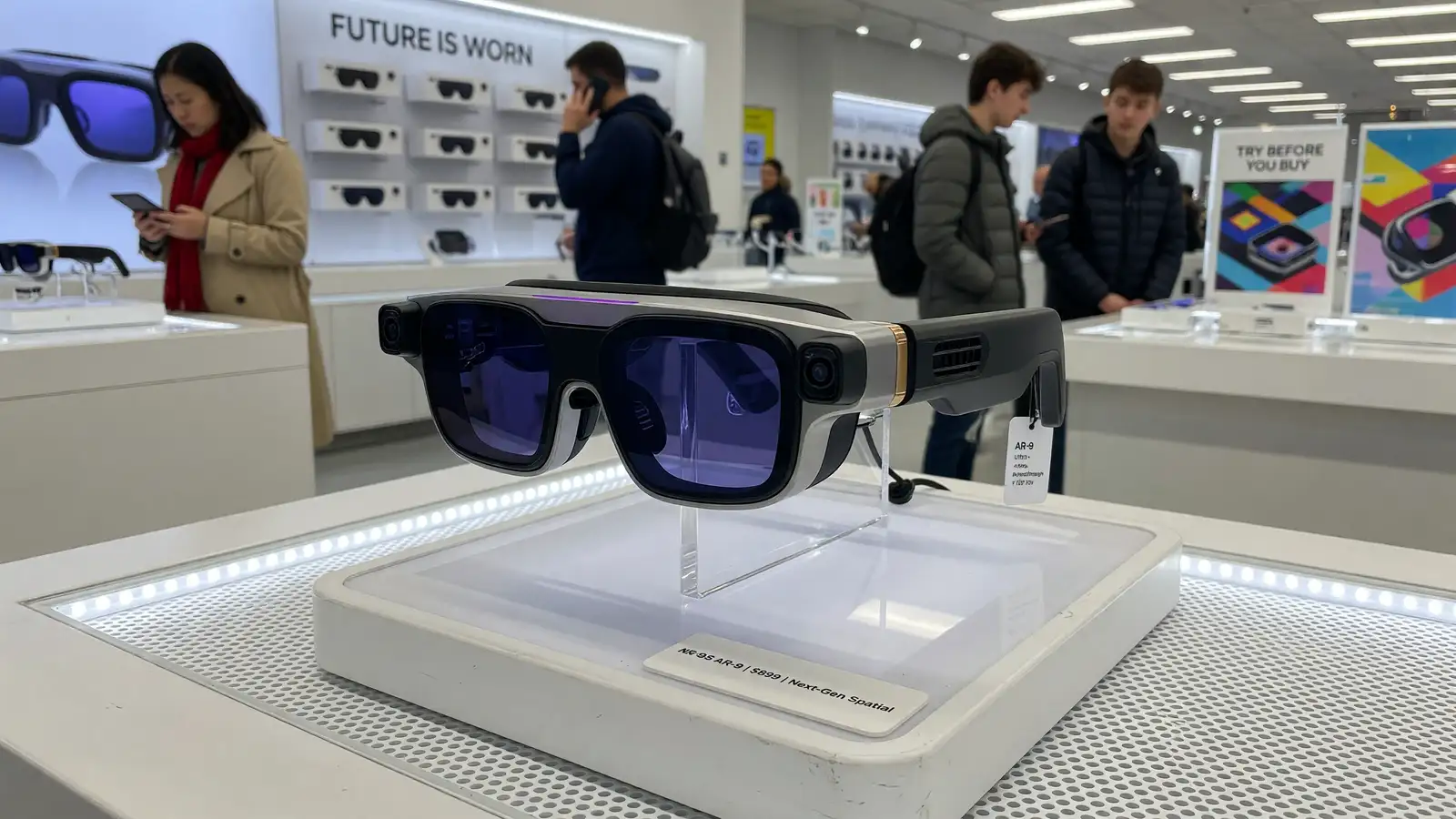
The last two years of “metaverse” hardware split in public. Headsets got heavier press. Glasses got into people’s pockets, or at least onto their faces at the grocery store. Connect 2026 is Meta admitting which line still moves.
Expect a glasses-led keynote and a Horizon OS software story. VR.org has been logging Horizon builds with Hologram Calling hooks and Codec Avatars, plus Hologram product tours inside the Meta AI app. That is a communications pitch, not a Beat Saber pitch. If you work in enterprise VR, you already felt this shift in the 2026 deployment story: the experiments that survived were meetings, twins, and training, not branded worlds.
A second, quieter signal landed on September 7. Meta patched its AI glasses so recording stops the moment the indicator light is covered. The fear the patch answers is specific. You cannot tell, on a sidewalk, whether a pair of Ray-Ban Metas is capturing you. Covering the LED was the obvious bypass. Cutting the recording when the LED dies is the minimum adult response.
It will not settle the argument. It does tell you Meta thinks glasses fail as a product if strangers treat every wearer like a hidden camera. IDC, in the same 36Kr report, puts display-free smart glasses at about $376 average selling price in 2026, falling toward $229 by 2030. That is a volume curve. Volume products get regulated in public, not at developer keynotes.
Snap is already trying to sell a display on the face for $2,195. We covered SPECS preorders in August. Connect is Meta’s chance to answer with something you might actually wear to a store. If the stage produces only a concept and a software demo, the glasses market still exists. It just will not be Meta’s next Quest.
The office visor is a different machine
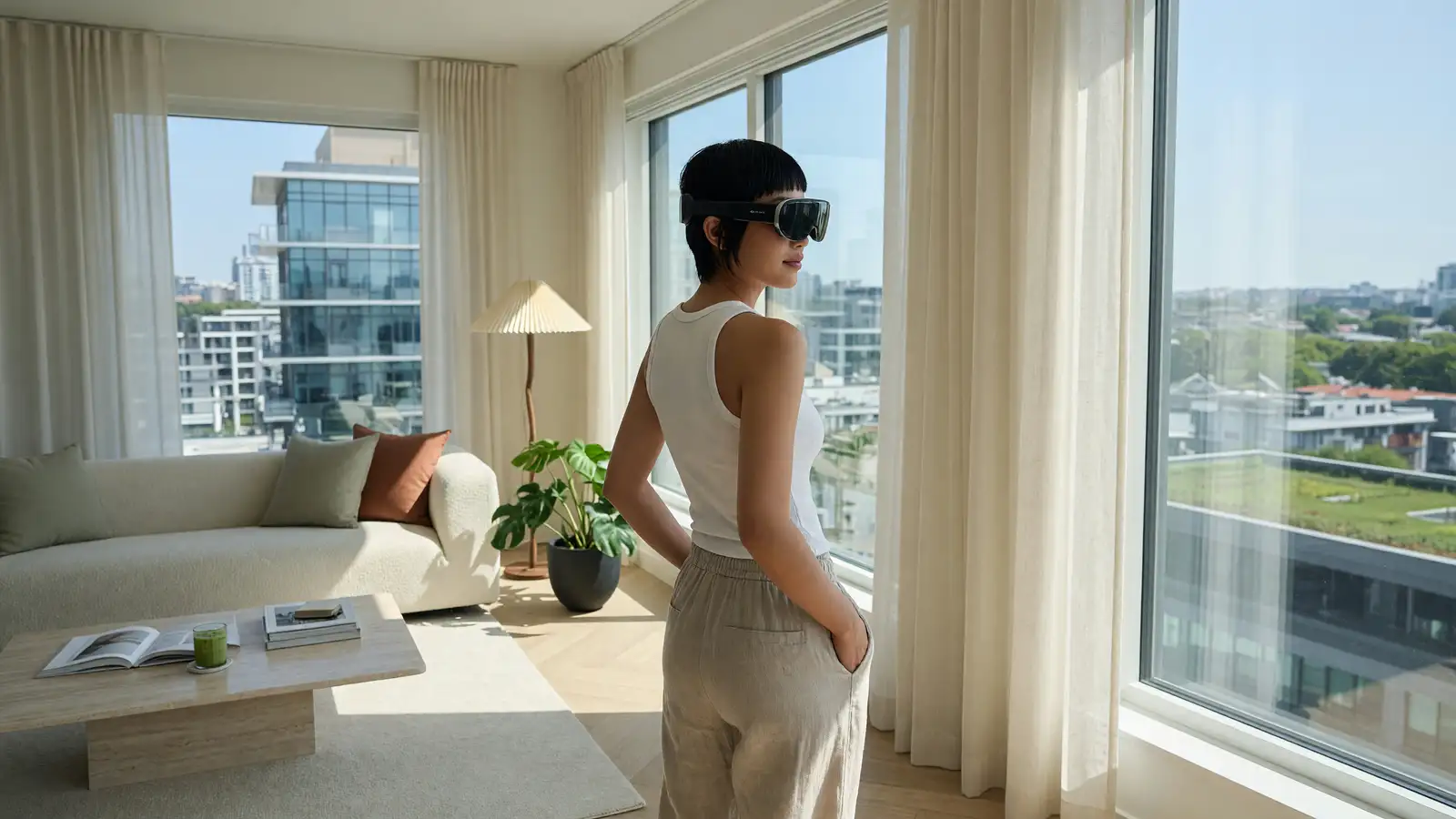
While Meta slips headsets to 2027, Immersed is building a visor that is supposed to weigh six ounces. Yahoo Tech’s writeup puts Apple’s Vision Pro around a pound, and in one passage a pound and a half. Either way, it is a skiing helmet for spreadsheets.
Immersed CEO Renji Bijoy’s most useful quote is not about resolution. Ninety-eight percent of their users mute the Quest’s built-in audio and pair AirPods to the laptop. So Visor ships without onboard audio. That is an unglamorous product decision, which is why I believe it. People who sit in VR for eight hours already solved sound with hardware they like. Adding speakers to a visor just to look complete is how you get a pound back.
The rest of the pitch is the same complaint every remote worker has made since 2023: gaming headsets are toys at minute 40, and Vision Pro is a $3,500 neck workout. Visor’s site name-drops Palmer Luckey and Qualcomm’s CMO. Treat endorsements as endorsements. The weight number is the part that matters. If Connect only teases Puffin at under 110 grams for 2027, Immersed is trying to occupy the year Meta left on the table.
This is also why “the metaverse” as a single category keeps producing bad forecasts. An all-day visor with no speakers, a pair of camera glasses with a recording LED, and a Quest 4 gaming slab in late 2027 do not share a user. They share a keynote slide.
110 grams is a different product than Quest
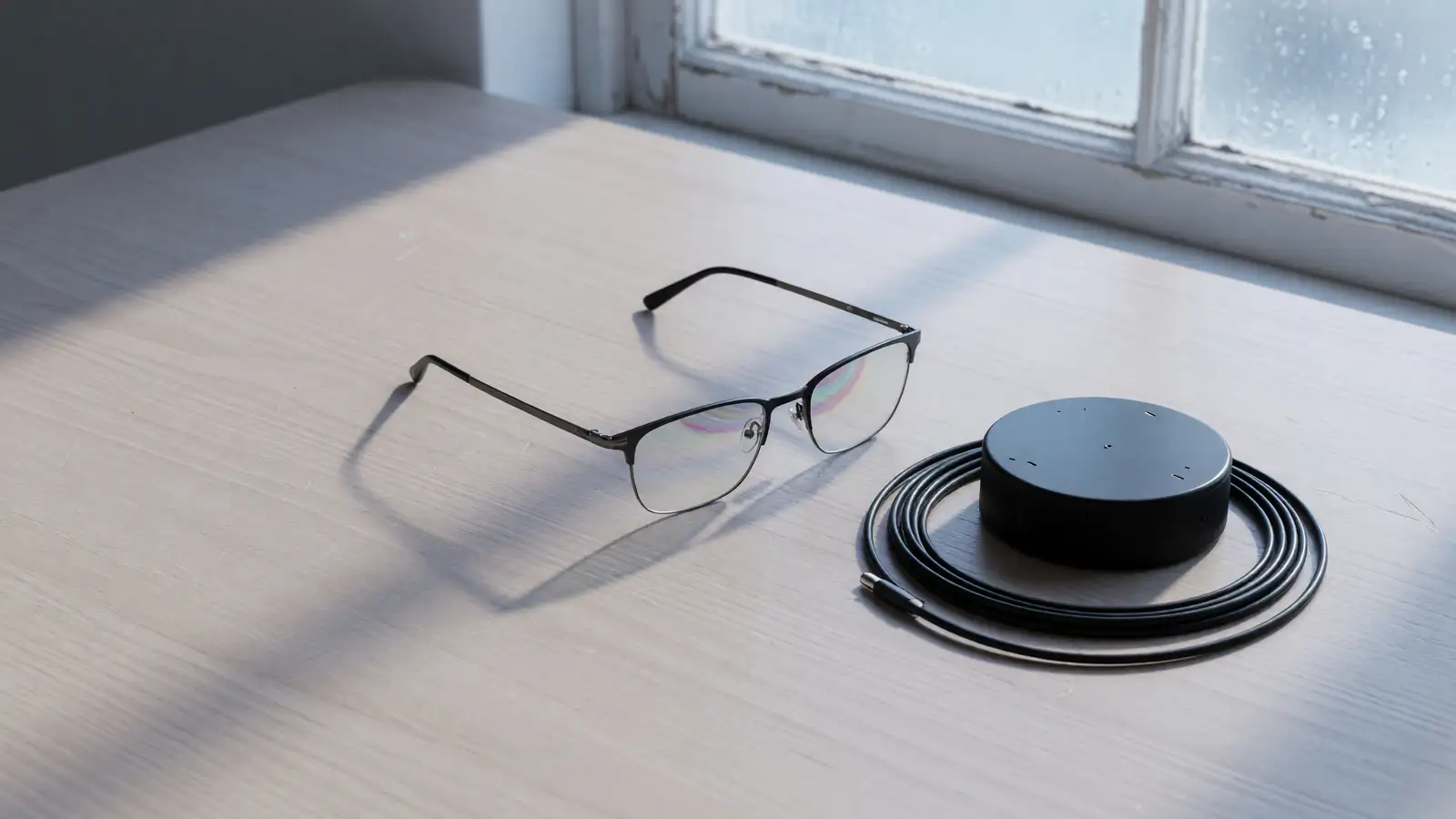
VR.org’s firmware note from July 29 is easy to skip and should not be. Setup graphics for the ultralight headset showed up in Quest software with a weight target under 110 grams. That is Bigscreen Beyond territory, with cameras. It is also not a 2026 SKU. Bosworth’s July line was “stay tuned for Connect on headsets” without a ship date. Griffin (Quest 4) remains H2 2027 at the earliest. Puffin remains H1 2027.
If you are writing a 2026 procurement plan for a warehouse or a hospital, none of those dates help you. Buy what is shipping: Quest 3 class for short sessions, Vision Pro if the budget is already unhinged, glasses if the job is hands-free capture and AI lookup, SPECS if you already drank Snap’s Kool-Aid at $2,195. Do not freeze a training rollout waiting for Puffin.
The 36Kr Connect preview also waved at Quest 4, Orion developer kits, and a Malibu watch as if they were this month’s cart. VR.org’s tracker contradicts a 2026 Quest 4 launch. When those two disagree, believe the tracker that separates rumor from firmware. Connect will still show headset footage. Footage is not inventory.
Weight is the actual competition. Vision Pro at roughly a pound, Immersed Visor at six ounces, Puffin targeting 110 grams next year. Six ounces is 170 grams. If Visor is real, it undercuts Meta’s ultralight teaser on mass and on calendar. If Visor slips, Meta’s 2027 slot looks tidy again. Either way, “mixed reality” as a single TAM is a slide, not a SKU.
Privacy is now a glasses feature
The recording-light patch is product design, not a blog post. Two years of Ray-Ban Meta in public produced one question: is that camera on. An LED you can tape over is not an answer. Stopping capture when the LED is blocked is closer.
It still depends on the companion phone, the cloud path, and whether a future firmware update reopens the hole. Read the patch notes on September 23 the way you read a car recall: what exactly stops, on which SKU, and whether older frames get it. IDC’s ASP path from $376 toward $229 only works if bystanders do not treat every pair as hostile.
Enterprise buyers should ask vendors the same LED question. Training headsets in a plant are not Ray-Bans, but workers still deserve to know when a camera is live. The metaverse deployment piece from August was about software that survived contact with operations. Hardware that cannot explain its recording state will not.
What Connect can still break
A glasses-led show can still move markets if Meta prices a new Ray-Ban class device like a phone accessory instead of a developer kit. It can also flop if the hologram calling demo needs a room full of rigs.
Watch three things on September 23:
- Does a glasses SKU get a price and a ship quarter, or only a silhouette.
- Does Hologram calling run on hardware people own, or only on a stage Quest.
- Does Griffin or Puffin get a date with a year on it, or a mood video.
If (3) is a mood video, do not rewrite your 2026 hardware budget. The interesting spatial-computing work this fall is still the stuff you can wear without a strap: glasses, and maybe a six-ounce visor if Immersed can actually build it.
Quest 4 remaining a 2027 story is not a tragedy. It is a schedule. The industry spent three years pretending every face computer was the same platform. Connect 2026 is the first Meta event in a while that is structured as if that were never true.
Use the week after the keynote to read the glasses fine print, especially recording indicators and what the companion phone still has to be doing. The metaverse that reaches a sidewalk is the one that has to explain itself to people who never put on a headset.
A practical watch-list for people who have to brief a boss on Thursday:
- Confirmed: Connect is September 23–24, Menlo Park, glasses teased in May, no headset ship date attached.
- Confirmed enough: Quest 4 / Griffin not a 2026 product; Puffin under 110 grams, H1 2027.
- Shipping-adjacent: Ray-Ban Meta class glasses with a new recording-light behavior as of this week’s patch.
- Unproven but weighted: Immersed Visor at six ounces, no onboard audio, office-first.
- Competitor already taking deposits: Snap SPECS at $2,195.
If your company bought Vision Pros in 2024 and they sit in a locked cabinet, Connect will not redeem that purchase. The eight-hour problem was weight and heat, which Immersed is at least naming. Meta is naming hologram calling. Those are different jobs. Pick the job before you pick the keynote clip to forward in Slack.
Hologram calling on Horizon OS is the software story most likely to look good on stage and mediocre on a Quest 3. Codec Avatars need capture. Capture needs cameras pointed at a face for a long time. Glasses can do a version of that. A 500-gram headset can do a better version that nobody wears on a commute. Watch whether Meta demos calling on glasses or only on a seated headset. That choice tells you which 2026 product they still believe in.
None of this requires you to like Mark Zuckerberg, or to call glasses a metaverse. It requires you to notice that the shipping curve and the keynote curve diverged. Glasses are in the street with a privacy patch. Headsets are in 2027 with a gram count. Office visors are trying to sneak between them at six ounces. That is the map. Connect is just a date on it. After the stream, ignore the memes for 24 hours and read the actual SKU sheet. That is the only way last year’s cabinet of Vision Pros happens less often. If there is no SKU sheet, there was no product. There was a keynote. Bring that sentence to the Monday meeting and you will sound less like a livestream recap. Stop after the SKU sheet.