Meta Goes Fully Open Source With Muse Glimmer, a 30B Parameter AI Model for Consumer Hardware
Meta just made its biggest open-source move in years. The company released Muse Glimmer, a 30-billion-parameter AI model designed to run autonomous agents directly on consumer hardware, under the Apache 2.0 license. That’s the most permissive open-source license available, with no restrictions on commercial use, modification, or redistribution.
This is a significant shift for Meta, which spent years defending Llama’s custom community license against criticism that it wasn’t truly open source. Muse Glimmer drops all of those restrictions entirely, and the implications for the AI industry are substantial. The release comes at a time when the debate over what constitutes “open source AI” has intensified, with different companies taking different positions on how freely model weights should be shared.
What Muse Glimmer Actually Is
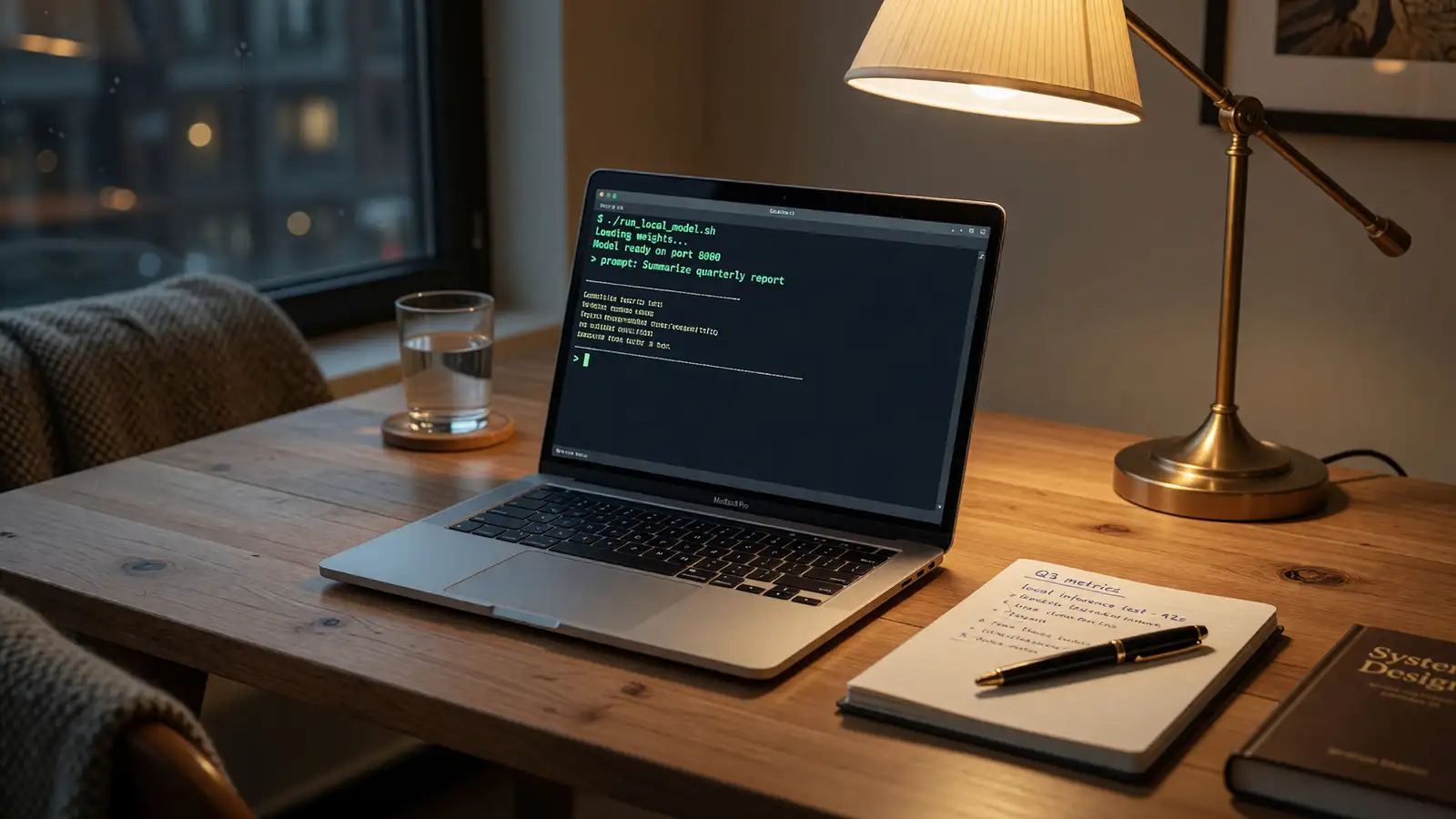
Muse Glimmer is a dense 30B parameter model optimized for running AI agents on high-end Macs and PCs. The key innovation isn’t the parameter count, which is modest by frontier model standards, but the optimization for local agent workloads. Most AI agents today depend on cloud infrastructure because they need the reasoning capacity of large models. Glimmer challenges that assumption by bringing agentic capabilities to hardware you can buy at Best Buy.
The model is available now on Hugging Face under the meta-models/Muse-Glimmer-30B repository. Support is rolling out through Ollama, LM Studio, vLLM, SGLang, Together AI, Fireworks AI, and OpenRouter, with optimized llama.cpp, MLX, and ExecuTorch integrations expected in the coming days. The breadth of platform support from day one is unusual and suggests Meta has been working with these tool providers for months to ensure smooth adoption.
Meta is also working with AMD, Arm, Dell, Intel, and Nvidia to optimize performance across different devices. The company has published developer documentation covering custom agent scaffolds, which suggests they’re serious about this being a production-ready tool rather than a research curiosity. The breadth of hardware partnerships is unusual for a single model release and indicates that Meta views local AI as a strategic priority.
The License Matters More Than the Model
The Apache 2.0 license is the real story here. Llama’s community license drew years of criticism for restrictions like its 700-million-monthly-user cutoff, which meant that any application reaching a certain scale needed Meta’s explicit permission. That restriction made Llama technically open source but practically constrained, especially for large enterprises and platform companies that couldn’t risk hitting the user threshold without a licensing deal.
Apache 2.0 has no such strings. You can use Muse Glimmer for any commercial purpose, modify it however you want, and redistribute your modifications without asking Meta’s permission. This is the same license used by foundational open-source projects like Apache Kafka, Kubernetes, and TensorFlow, and it signals that Meta wants Muse Glimmer to be adopted as broadly as possible.
The timing is notable. Meta released Muse Spark as a proprietary model in April 2026, its first model since the Llama family that wasn’t open-weight. That decision raised questions about whether Meta was pulling back from open source. Muse Glimmer, arriving four months later with a more permissive license than Llama ever carried, suggests the opposite: Meta is doubling down on open source, but doing so selectively, choosing which models to open and which to keep proprietary. This selective approach lets Meta maintain competitive advantages in its most advanced research while building an ecosystem around models it’s willing to share.
Why 30B Parameters Matters
The 30B parameter count is a deliberate choice. It’s large enough to handle complex agentic tasks, including multi-step reasoning, tool use, and code generation, but small enough to run on consumer hardware with sufficient RAM. A 30B model in 4-bit quantization requires roughly 16-20GB of RAM, which fits within the memory budget of modern MacBooks and high-end PCs.
This positions Muse Glimmer in a sweet spot that larger models can’t reach. Running a 405B model locally requires hardware that costs thousands of dollars and consumes significant power. Running a 7B model is easy but limits the complexity of tasks the agent can handle. At 30B, you get enough capacity for meaningful work while keeping the hardware requirements accessible.
For developers building AI agents, this means you can prototype and test locally without burning through API credits. For enterprises, it opens the possibility of running sensitive workloads on-premise without sending data to external APIs. For individual users, it means having a capable AI assistant that runs on your own machine, with no data leaving your network.
The agent optimization is particularly important. Unlike general-purpose chat models, agent-optimized models need to handle tool calling, multi-step planning, and persistent state across interactions. Meta has designed Glimmer specifically for these workloads, which means it should outperform general-purpose models of similar size on agent benchmarks, even if it trails behind larger models on raw language tasks.
The practical implications extend beyond just running the model locally. Organizations that handle regulated data, including healthcare, finance, and legal sectors, have been cautious about using cloud-based AI because of data residency and compliance concerns. A capable model that runs entirely on local hardware sidesteps those concerns entirely. You get the AI capability without the regulatory overhead of sending data to external services.
For the open-source community specifically, Glimmer’s agent optimization fills a gap. Most open-source models are trained for general-purpose chat or code completion, not for the specific demands of autonomous agent workflows. By focusing on agent capabilities, Meta is targeting a use case that’s growing rapidly but underserved by existing open-source options.
The Ecosystem Response
The response from the AI infrastructure ecosystem has been swift. Ollama, which makes it easy to run LLMs locally, is among the first to add support. LM Studio, vLLM, and SGLang are following close behind. Together AI and Fireworks AI, which provide inference infrastructure, are integrating Glimmer into their platforms.
The hardware partnerships with AMD, Arm, Dell, Intel, and Nvidia suggest that Muse Glimmer is being optimized for a wide range of devices, from Apple Silicon Macs to NVIDIA-powered workstations to ARM-based edge devices. This breadth of optimization is unusual for a single model release and indicates that Meta views local AI as a strategic priority, not just a research project.
For the open-source AI community, Glimmer represents something close to an ideal release: a capable model, a permissive license, broad hardware support, and an ecosystem of tools ready to use it. The question is whether it can compete with cloud-based models on the tasks that matter most to developers and enterprises.
Early benchmarks, while limited, suggest that Glimmer performs competitively with similarly sized models on standard AI benchmarks, but its real advantage shows up in agent-specific evaluations. Tasks that require tool calling, multi-step reasoning, and state management are where Glimmer’s optimization for agent workloads makes the biggest difference. For developers who have been waiting for a local model that can handle real agent workflows, not just simple chat, Glimmer appears to deliver.
What Zuckerberg Said
Mark Zuckerberg confirmed the release on X, writing that “Muse Glimmer is a great 30B parameter dense model that can run locally.” He also teased that Meta will “soon release the weights for Muse Spark 1.2, our late” before the post was cut off, presumably referring to the next iteration of Meta’s proprietary flagship model.
The implication is clear: Meta plans to maintain both open and proprietary model lines, giving developers a choice between fully open models with no restrictions and more capable proprietary models that push the boundaries of what’s possible. This dual-track approach lets Meta capture the benefits of open-source adoption while preserving competitive advantages in its most advanced models.
It also positions Meta favorably in the ongoing debate about AI regulation. By releasing a capable model under the most permissive license available, Meta can argue that it’s contributing to AI democratization while competitors keep their most powerful models behind APIs and licensing agreements. Whether that argument holds up depends on how you define “democratization,” but the optics are favorable for Meta.
The release of Muse Spark 1.2 weights, when it happens, will be another test. If Meta releases its most powerful proprietary model under similarly permissive terms, it would represent a fundamental shift in how the company approaches AI development. If it keeps restrictive terms, it will confirm the dual-track strategy and suggest that truly open models will remain one tier below the frontier.
The Bigger Picture
Meta’s move comes at a moment when the open-source AI ecosystem is fracturing. Some companies are tightening their licenses, others are releasing models with increasing restrictions, and the definition of “open source AI” itself is being debated. By releasing Muse Glimmer under Apache 2.0, Meta is making a clear statement about where it stands in that debate, and it’s a statement that will be difficult for competitors to ignore.
For the AI industry, the practical impact will depend on how well Muse Glimmer actually performs in real-world agent tasks. A 30B model running locally will never match the raw capability of a frontier cloud model, but if it handles 80% of common agent workflows at a fraction of the cost and with complete data privacy, that’s a compelling value proposition for a lot of use cases. The cost savings alone, eliminating API calls for routine agent tasks, could justify the hardware investment for many organizations.
The release also puts pressure on other AI companies to clarify their own open-source strategies. If Meta can release a capable 30B model under Apache 2.0, the argument for restrictive licenses on similar-sized models becomes harder to make. The open-source AI landscape just got more competitive, and developers are the ones who benefit.
For anyone building AI applications, the message from Meta is simple: you don’t need to send your data to the cloud to get capable AI performance. The tools are available, the license is permissive, and the hardware can handle it. The era of local AI agents just got a lot more real, and the next few months will tell us whether Glimmer lives up to the promise or whether the gap between local and cloud performance remains too wide for most production use cases.