Pico Space Pro Filed B3110. Q4 Is a Target.
A certification number is not a ship date, and a model number is not a price. Luna at UploadVR on October 11 says images of ByteDance’s next headset, Pico Space Pro, have shown up in Japanese regulatory filings. The documents sit under certification number 202-JWM032. The device carries model number B3110, the same model number UploadVR already tied to the US FCC filings. That is the new primary fact this week. Everything else in the piece is either a description of those images or a recap of Pico’s own missed calendar.
This site already has a headset with a price and three incompatible ship sentences. Pimax’s Crystal Pro is $1,399, and the release, the FAQ, and the store do not share a date. It already has a glasses-shaped device with a price, a weight, and a puck. Meta’s VR glasses are $1,299, about 100 grams, aimed at spring 2027. It already has an AR partnership that was a competitive claim before it was a sticker. Snap and Xreal, in that earlier piece, were the threat narrative. Pico Space Pro is none of those articles. It is a filing. The filing does not contain the numbers those articles were built to compare.
Pico Space Pro’s B3110 sits on two components
UploadVR says the US filings list a “Mixed Reality Computer,” with separate entries for the headset and an external tethered puck. The FCC IDs are 2A5NV-AA1Z0 for the headset and 2A5NV-B3110 for the puck. The labels call them a “Mixed Reality Headset” and a “Mixed Reality Main Unit.” Both components use B3110 as the model number. Read that twice. The puck’s FCC ID contains B3110. The model number on both labels is also B3110. An ID and a model number can share a string without being the same field. If a spreadsheet has one column called “B3110,” it has already collapsed a headset, a puck, an FCC ID, and a model number into a single key.
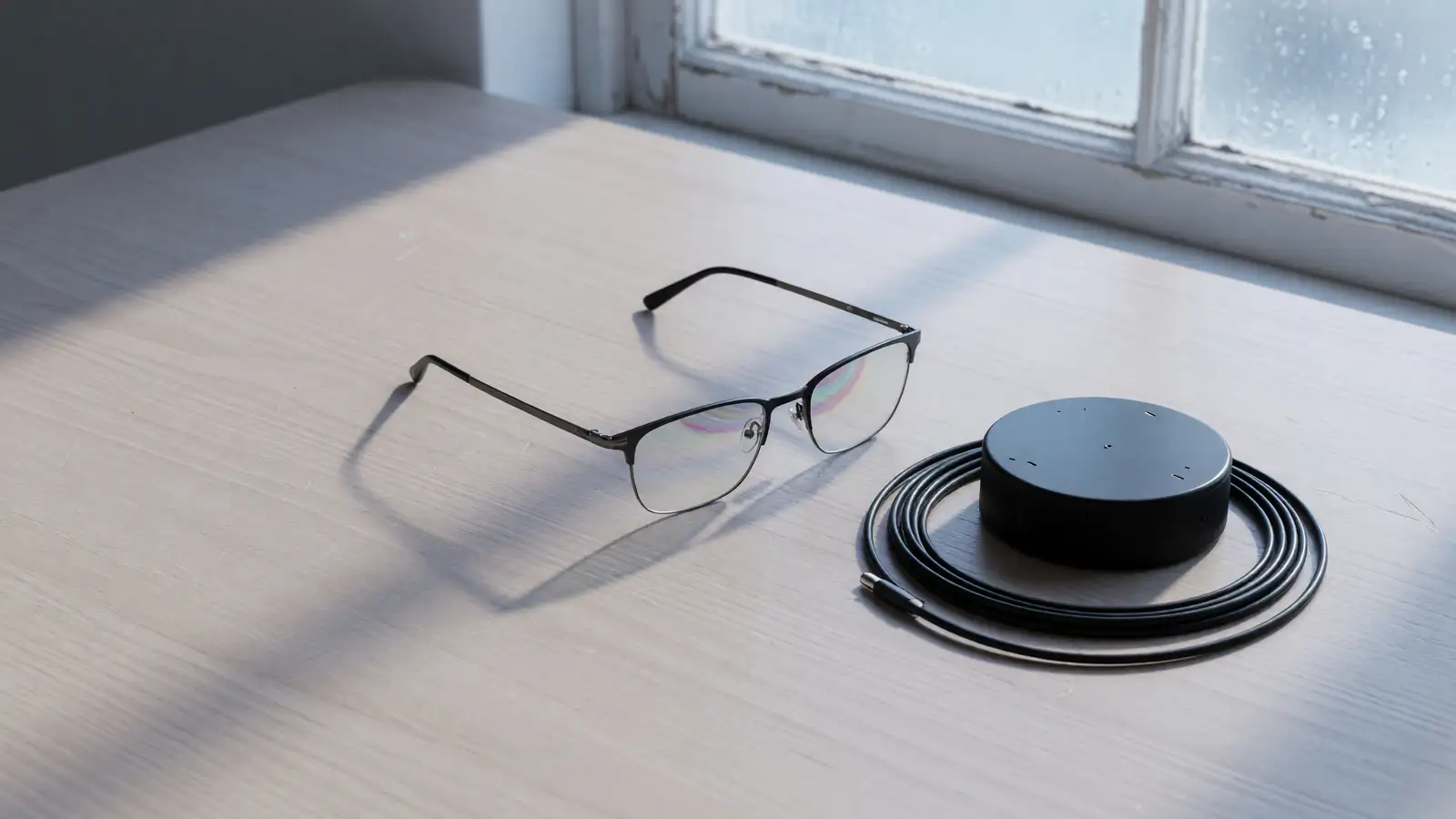
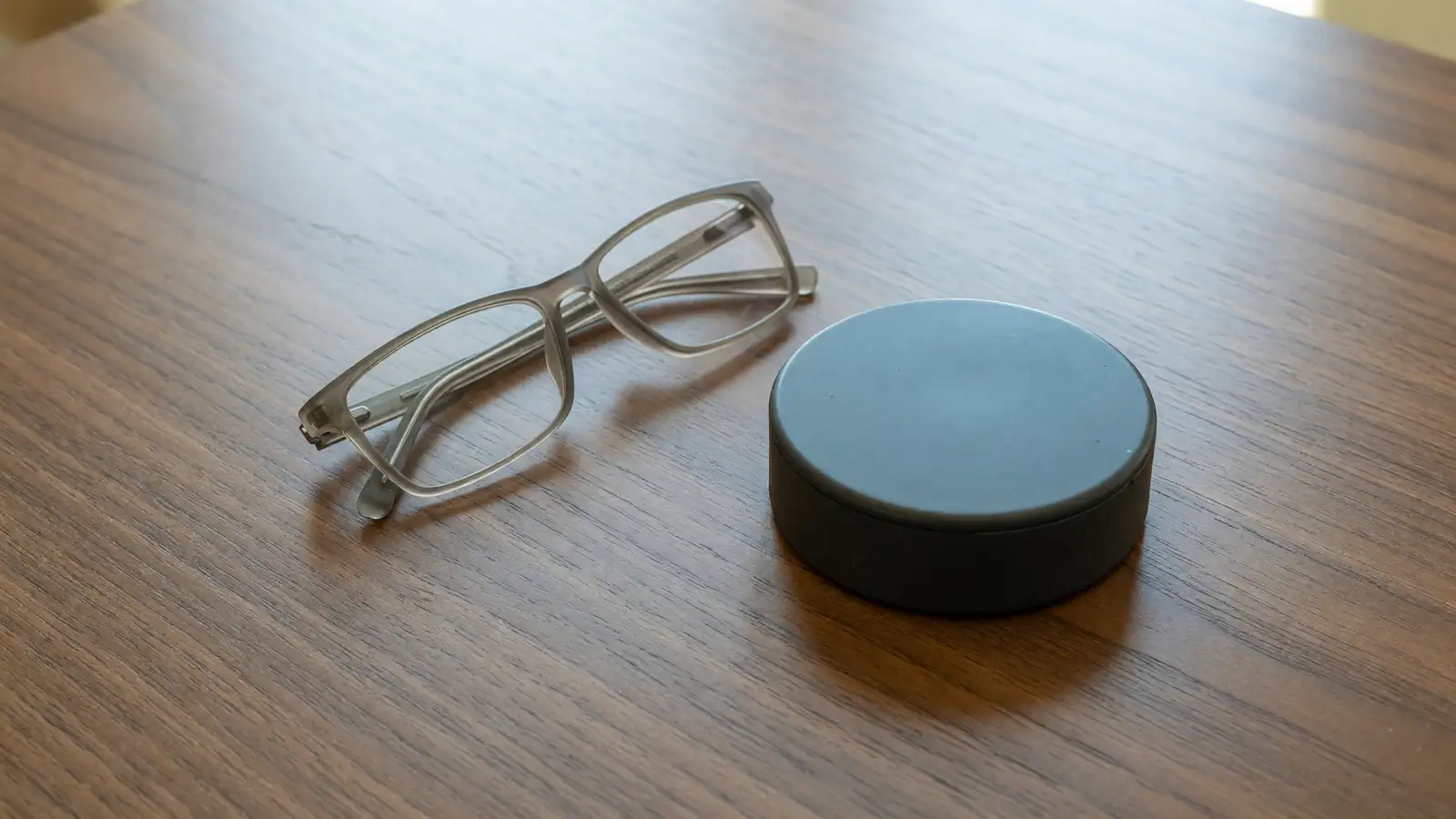
The puck, in UploadVR’s summary of those filings, is a tethered compute and battery unit. That is the same physical idea as the puck on Meta’s VR glasses, and it is not the same product, the same price, or the same year. Meta’s puck is attached to a $1,299 pair of glasses aimed at spring 2027, in the story we already published. Pico’s puck is a line in a filing. No watt-hour figure, no gram weight, no runtime. Crystal Pro’s pocket battery was at least described as 16,000mAh and 67Wh in the documents Reeves was comparing, and even that description came without a runtime. Pico’s October 11 story does not get that far. A tethered battery puck with no published capacity is a shape. It is not a spec sheet.
Japanese filings, still in the October 11 piece, use the same B3110 model number. UploadVR points at external images in document 202-JWM032_01_002 and a test-setup image in 202-JWM032_02_004. I have not opened those image files. I am not going to describe a color the article did not name. What Luna does say is that the overall design matches earlier SDK renders, including the rear strap, the visor, and the forehead pad, and that this unit’s color scheme and finish differ from those renders. The comparison Luna reaches for is Vivo’s Vision headset, announced and demonstrated in 2025, not yet fully on sale. “Resembling” is UploadVR’s verb. It is not a statement that Pico is shipping Vivo’s panels, and it is not a statement that Vivo’s commercial delay has transferred to Pico. Two headsets can look related in a filing photo and still miss the market on different calendars.
Q4 2026 and February 28, 2027 are both in the piece
The launch target and the confidentiality date do not point at the same month. UploadVR says Pico is now targeting Q4 2026. It also says the short-term confidentiality period on the US FCC documents expires on February 28, 2027. A company can intend to sell a headset in the fourth quarter and still have drawings under a confidentiality clock that runs into the next February. Those are different documents. Treating February 28 as a ship date would be a misread. Treating Q4 as a date the FCC has blessed would also be a misread. The FCC date in this story is a confidentiality expiry. The Q4 date is the company’s current target, as UploadVR reports it, after an earlier target already slipped.
The slip is the part of the calendar that is already behind them. UploadVR’s October 11 piece recounts its own September story: Pico Space Pro appeared to receive FCC certification the day before an originally planned launch event. In August, the company announced a launch event on Asia-region social channels and revealed the product name. Days later it canceled the event and said the device would be delayed to Q4 2026. I am taking that sequence from the October 11 article, which is the story dated inside this week. I am not re-reporting the August posts as if I had opened them. If the August wording was softer than “delayed to Q4,” I would not know it from this extract. The sentence I can stand on is the one Luna printed on October 11.
A canceled event plus a Q4 target plus a February 2027 confidentiality expiry is three clocks. Crystal Pro taught the same lesson with three Pimax documents. Pico’s version is a social post, a filing, and a confidentiality stamp. None of them is a preorder page with a price. Until that page exists, “targeting Q4” is a plan you cannot pay.
The design notes are a reading of pictures, not a teardown
UploadVR also points at an earlier story by David Heaney: SDK videos had already leaked a design that looked like a cross between Apple’s Vision Pro and Samsung’s Galaxy XR, with a rear strap almost identical to Vision Pro’s Solo Knit Band, a visor and forehead pad resembling Galaxy XR, and an external tethered puck. The October 11 filings, Luna writes, match that design in the strap, visor, and forehead pad, and diverge in color and finish.
I am not going to promote “almost identical” into a shared part. A strap that looks like another company’s knit band, in a video, is a visual comparison. It does not tell you the panel, the chip, the field of view, or the weight. The November 2025 presentation, which UploadVR says was the first time ByteDance mentioned the next headset and revealed some specifications, is not quoted with those specifications in the October 11 extract. I will not fill them in from memory of a different headset. March 2026 is when the company teased the device publicly and called it Project Swan. The name changed. The filing name is Pico Space Pro. Project Swan is the earlier label, not a second model number I can put next to B3110.
ByteDance owns Pico, and UploadVR identifies ByteDance as TikTok’s owner. That ownership is context for who filed. It is not a distribution plan. A TikTok parent company does not, in this article, announce a store date, a country list, or a bundle with a phone. If a launch rumor adds those, it is not this filing.
What a buyer still does not have
Set the missing fields in a row, because the absence is the story. No price. No resolution. No weight. No battery capacity. No refresh rate. No named processor. No ship day inside Q4, only the quarter. No statement that a Japanese certification number means the headset can be sold in Japan next month. UploadVR’s headline is “spotted in Japanese regulatory filings.” The body says the documents are listed under a certification number. I am not upgrading either sentence into “certified for retail.”
The headsets you can already price are the ones this site has covered with documents that disagree in smaller ways. Crystal Pro has a price, $1,399, and a ship date that depends on which Pimax page you believe. Meta’s glasses have a price, $1,299, and a spring 2027 target attached to a puck. Pico Space Pro has a model number that appears on two components, a pair of FCC IDs, a Japanese certification number, and a quarter. Comparing $1,399 with “no price” is not a bargain. It is a reminder that a filing photo cannot lose a price war.
If Q4 produces a store page, the page’s date and the page’s dollar are the ones to believe, and they should be checked against 202-JWM032 rather than against a Project Swan teaser. If Q4 produces another delay, February 28, 2027 is still only the day a confidentiality period ends. It is not a consolation ship date. The filing did what filings do. It showed a model number and a shape. It did not sell you a headset.
A filing photo is a worse document than a contradictory store page
Crystal Pro is the useful comparison, and not because the headsets are alike. Reeves, in the piece we already published, could put $1,399 next to a box list: headset, two ringed controllers, a Wi-Fi 6E adapter, a 16,000mAh pack rated 67Wh on Pimax’s own graphic. He could also put three ship sentences next to each other and refuse to collapse them. That is a messy commercial launch. Pico’s October 11 story cannot start that argument. There is no box list. There is no dollar. There is no season inside the quarter. The mess, such as it is, sits one level earlier: a canceled August event, a September certification story UploadVR told about its own prior reporting, and an October filing that confirms the model number survived the delay.
Meta’s glasses are the other comparison, and the shared word is “puck.” UploadVR’s FCC summary says Pico’s external unit is a tethered compute and battery puck. Our October 3 piece said Meta’s glasses ship with a puck, at $1,299, aimed at spring 2027. Spring 2027 is a season. February 28, 2027 is a confidentiality expiry on Pico’s US documents. Putting those two dates in one cell because both say 2027 is how a spreadsheet manufactures a horse race. Meta has named a price and a season. Pico has named a model number and a quarter that has already been used once as a delay target. The quarter can still slip. The confidentiality date will arrive whether or not a store opens.
The Snap and Xreal piece on this site was a partnership story. It is here as a reminder that not every glasses headline is a filing. A partnership can be priced later, or not. A regulatory photo cannot be preordered. If you are keeping a single note of “headsets announced this month,” split it. Crystal Pro has a price and a date fight. Meta’s glasses have a price and a season. Pico Space Pro has B3110, two FCC IDs, certification number 202-JWM032, and a Q4 target. Those are not three rows of the same table.
What the images are allowed to prove
Luna’s design notes are specific enough to be checked and too weak to be a teardown. The October 11 images match the SDK renders on three points: rear strap, visor, forehead pad. They differ on color and finish. The earlier SDK videos, as the same article summarizes Heaney, looked like a cross of Vision Pro and Galaxy XR, with a strap compared to the Solo Knit Band. Matching an earlier leak is evidence that the filing is the same project, not evidence that the commercial unit will look like the filing unit. Companies change faceplates. UploadVR already recorded one change, the finish, between the SDK renders and this Japanese unit. A second change before a store photo would not break the model number.
I am not going to estimate a panel count from a visor shape. Vision Pro and Galaxy XR are reference points in someone else’s sentence. They are not donors of resolution figures. The November 2025 presentation is the moment UploadVR says some specifications were revealed. Those specifications are not in the October 11 extract. Leaving them blank is the accurate table. Filling them from a headset you have worn, or from a rumor, would make this filing look more finished than the journalist who read it was willing to claim.
Project Swan, the March teaser name, should stay in the note as a former label. Search alerts for Swan will not catch B3110, and search alerts for B3110 will not catch Swan. If you are tracking this device across a quarter, you need both strings, plus the two FCC IDs, plus 202-JWM032. Five identifiers, zero prices. That ratio is the status of Pico Space Pro on October 11, 2026. It will stay the status until a page asks for money or a second filing contradicts the model number.