Roblox's $1.5 Billion Quarter Still Wasn't Enough — What the Metaverse Economy Actually Looks Like in 2026
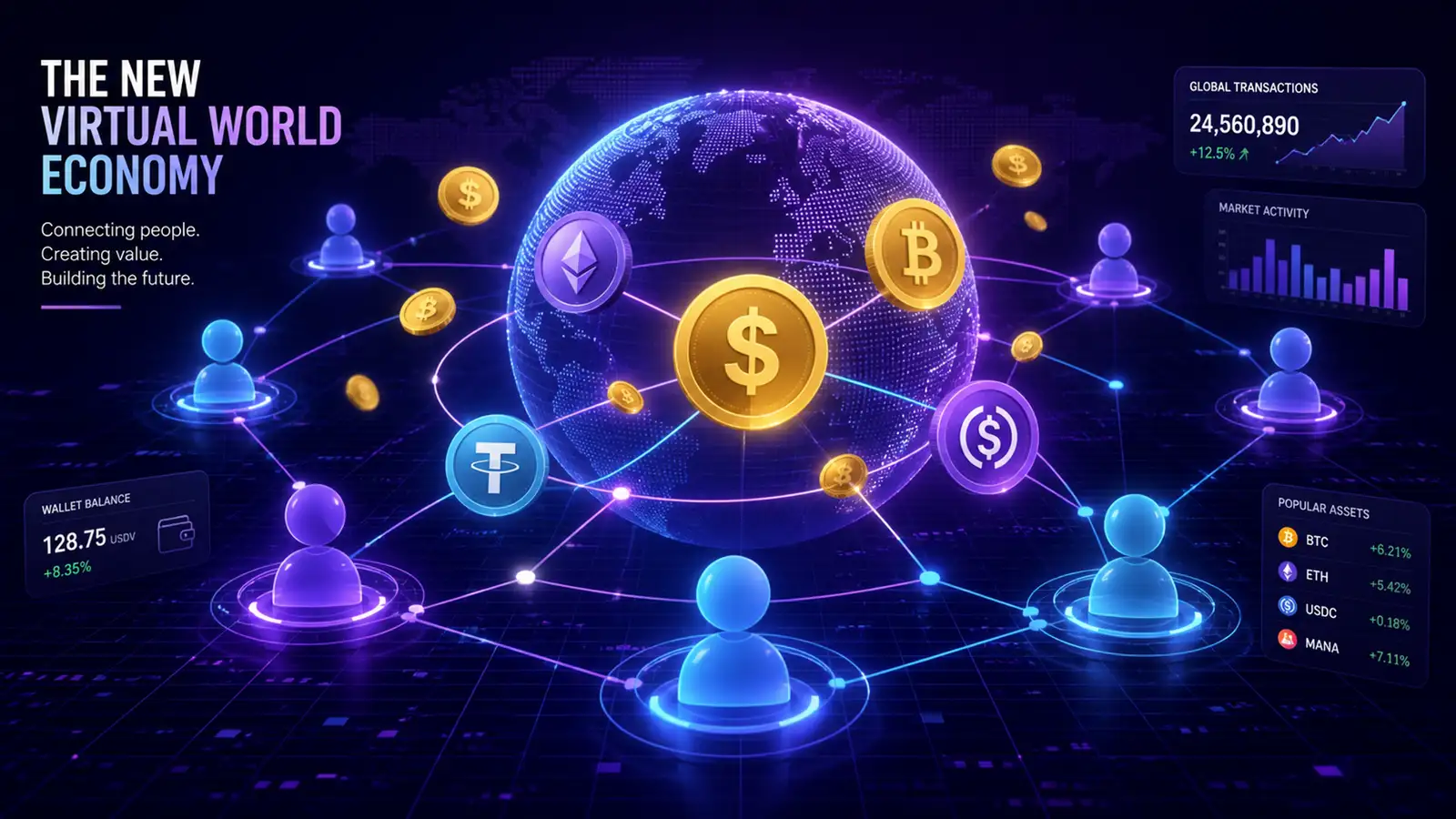
Roblox reported Q2 2026 earnings on July 30, and the market’s reaction was brutal. Shares dropped 34% in the following days, erasing billions in market value. The headline numbers looked fine on the surface: revenue of $1.47 billion, up from $1.26 billion a year earlier. But the details told a different story. Bookings — the metric that reflects actual user spending before accounting recognition — came in below expectations. Management cut its full-year revenue guidance, then withdrew it entirely, citing “macroeconomic uncertainty.” For a company that had been riding the metaverse narrative for years, the message was clear: the virtual world economy is real, but it is not growing the way investors were told it would.
The stock reaction was not just about one quarter. It was about the gap between what Roblox was supposed to become and what the numbers suggest it actually is. Analysts had modeled 20-25% annual bookings growth through 2026, with revenue projections around $1.08-1.12 billion for the full year. The Q2 results fell short of those targets, and management’s decision to withdraw guidance — a move companies typically make when they genuinely do not know what happens next — spooked investors more than the actual numbers did.
The numbers behind the narrative
Roblox’s core business model is straightforward. Users buy Robux (the platform’s virtual currency) with real money. They spend Robux on virtual items, game passes, and developer-created experiences. Roblox takes a cut of every transaction, typically around 27% after developer payouts and platform fees. The remaining revenue goes to the creators who build the experiences that keep users engaged.
In Q2 2026, daily active users hit 123 million, up from 113 million a year earlier. That is a healthy 8.8% growth rate for a platform that many assumed was peaking. But the revenue per user told a more complicated story. Average bookings per daily active user were essentially flat, suggesting that while more people are showing up, they are not spending more. The platform is getting wider but not deeper.
The bookings miss is significant because Roblox had been forecasting 20-25% annual bookings growth. The company’s expansion into new demographics and geographies has brought in more users, but these users tend to spend less than the North American and European audiences that drove early growth. As the user base becomes more international, average revenue per user naturally declines, even if total revenue continues to grow. This is the classic tension between user growth and monetization efficiency, and Roblox is feeling it acutely.
The company’s take rate also matters. Roblox’s 27% platform fee is higher than many competitors. Apple’s App Store takes 15-30% depending on developer size. Epic Games’ Fortnite Creative takes a similar cut. But Roblox’s fee applies to a virtual currency that users buy at a premium, so the effective cost to creators is higher than the headline number suggests. When a user buys 1,000 Robux for $9.99, the creator receives a fraction of that after Roblox takes its cut and the currency conversion reduces the value further. This pricing structure means that Roblox captures a larger share of user spending than its headline fee rate would suggest, which benefits the company’s margins but limits creator earnings.
The creator economy problem
Roblox’s metaverse model depends on its creator ecosystem. The platform hosts roughly 5 million creators who earn through the Developer Exchange program, which converts Robux into real currency. In 2023, these creators collectively earned $1.4 billion, a 12% increase from the prior year. That sounds impressive until you realize it represents about $280 per creator per year on average. The distribution is extremely skewed: a tiny fraction of top creators earn six or seven figures, while the vast majority earn almost nothing.
This creates a structural problem. For the metaverse economy to sustain itself, it needs a broad middle class of creators who can justify spending time building experiences. If only the top 1% of creators earn meaningful income, the platform relies on hobbyists and aspiring professionals who may eventually burn out or move to platforms with better economics. Roblox has tried to address this with improved discovery algorithms and creator tools, but the fundamental economics have not shifted enough to change the math.
The creator retention challenge is real. Building a Roblox experience requires significant time investment — often months of development for a game that might attract thousands of players but generate modest revenue. For every breakout hit like “Adopt Me” or “Brookhaven,” there are thousands of experiences that barely get noticed. The platform’s discovery algorithm favors established experiences with high engagement, making it harder for new creators to break through. This creates a chicken-and-egg problem: new creators need users to succeed, but users gravitate toward experiences that already have large player bases.
Roblox has responded with initiatives like the Roblox Creator Fund and improved analytics tools, but the core issue remains. The platform’s virtual economy generates real money, but it distributes that money in a way that concentrates wealth among a small number of top creators. This is not unique to Roblox — it mirrors the economics of YouTube, Instagram, and other creator platforms — but it limits the metaverse’s ability to function as a broad-based economic engine.
The comparison to traditional gaming is instructive. A AAA game studio might spend $200 million developing a title that generates $1 billion in revenue. A Roblox creator might spend six months building an experience that generates $10,000. The return on investment for individual creators is dramatically lower, which means the platform depends on volume — millions of experiences generating small amounts of revenue — rather than quality. This volume-dependent model works for user engagement but struggles to create the kind of sustainable creator middle class that would justify calling Roblox a true metaverse economy. The platform needs its creators to succeed financially, not just its shareholders. Without that, the metaverse economy remains merely a concept rather than a truly sustainable reality.
What the withdrawal of guidance actually means
When a company withdraws full-year guidance, it usually means one of three things: internal projections have deteriorated significantly, management lacks visibility into near-term trends, or both. Roblox’s phrasing — citing “macroeconomic uncertainty” — suggests the latter. Consumer spending on digital entertainment has been volatile in 2026, with inflation affecting discretionary budgets and competition from other entertainment platforms intensifying.
But there is a more fundamental issue. Roblox has been growing by expanding into new demographics and geographies. The platform now targets users as young as 6 and has made significant inroads in markets like India, Brazil, and Southeast Asia. These users are valuable for engagement metrics but tend to spend less per user than the North American and European audiences that drove early growth. As the user base becomes more international, the average revenue per user naturally declines, even if total revenue continues to grow.
The withdrawal of guidance also reflects uncertainty about Roblox’s expansion bets. The company has invested heavily in age migration — getting older users to stay on the platform as they age out of the core demographic. It has launched music experiences, live events, and social features to compete with platforms like TikTok and Instagram for teen and young adult attention. These initiatives are expensive and their returns are uncertain. Pulling guidance gives management flexibility to invest without quarterly earnings pressure.
There is also the question of advertising revenue. Roblox has been building an advertising business that lets brands place virtual billboards and sponsored experiences within the platform. This revenue stream is growing but remains a small fraction of total bookings. For advertising to become a meaningful contributor, Roblox needs to demonstrate that its audience is valuable to advertisers — and that requires proving that users are not just showing up, but engaging with branded content in ways that translate to real-world purchasing behavior.
The timing of the guidance withdrawal also matters. Roblox pulled guidance during a period when the broader gaming industry is facing headwinds. Mobile gaming revenue has plateaued in key markets, console gaming is between hardware cycles, and consumer attention is fragmenting across more entertainment options. Roblox is not immune to these trends, and the guidance withdrawal acknowledges that the company’s growth trajectory is less predictable than it appeared six months ago.
The metaverse economy is real, just smaller than promised
The Roblox earnings story is not about a company failing. It is about a company growing in ways that do not match the narrative investors were sold. Roblox generated $1.47 billion in revenue in a single quarter. It has 123 million daily active users. Its creator economy distributed hundreds of millions of dollars to developers. These are real numbers from a real business.
But the metaverse was supposed to be the next internet — a persistent, shared virtual space where billions of people would spend significant portions of their daily lives. Roblox’s numbers suggest something more modest: a gaming and social platform that is popular with younger users, generates meaningful but not spectacular revenue, and faces the same economic pressures as any consumer entertainment business.
The 34% stock drop was partly an overreaction to a guidance withdrawal, but it also reflected a recalibration of expectations. The metaverse economy exists. It just is not the trillion-dollar opportunity that was marketed to investors. For Roblox, the path forward is execution: proving that it can increase per-user spending, retain creators, and expand into adjacent markets without burning through cash. The next two quarters will determine whether this was a speed bump or the beginning of a longer reckoning.
What the Roblox results ultimately reveal is that the metaverse’s economic model is more like a niche entertainment platform than a new internet. It generates real revenue, supports a real creator ecosystem, and serves a real audience. But it does not yet justify the hundreds of billions of dollars in investment and hype that surrounded it. The virtual world economy is real. It just is not as big as promised. And for investors who bought into the metaverse narrative at peak hype, the Roblox earnings report was a reminder that even the most promising virtual worlds eventually have to contend with the economics of the real one.