Tencent Launches Enterprise AgentOps: AI Agents Finally Get Their DevOps Moment
Building an AI agent that works in a demo is easy. Building one that works inside a company with real CRM data, legacy ERP systems, and a security team that needs to sign off on every integration point is something else entirely. That gap between prototype and production is where most enterprise AI projects die. Tencent Cloud thinks the answer isn’t a better model. It’s better infrastructure.
At the World Artificial Intelligence Conference in Shanghai last week, Tencent unveiled ADP 4.0, a major overhaul of its Agent Development Platform that the company is positioning as the first comprehensive, enterprise-grade AgentOps platform. The pitch is straightforward: if DevOps gave software teams the tooling to move from waterfall releases to continuous deployment, AgentOps should do the same for AI agents. The question is whether the category is ready for that level of operational maturity, or whether Tencent is building scaffolding for a building that hasn’t been designed yet.
What ADP 4.0 Actually Does
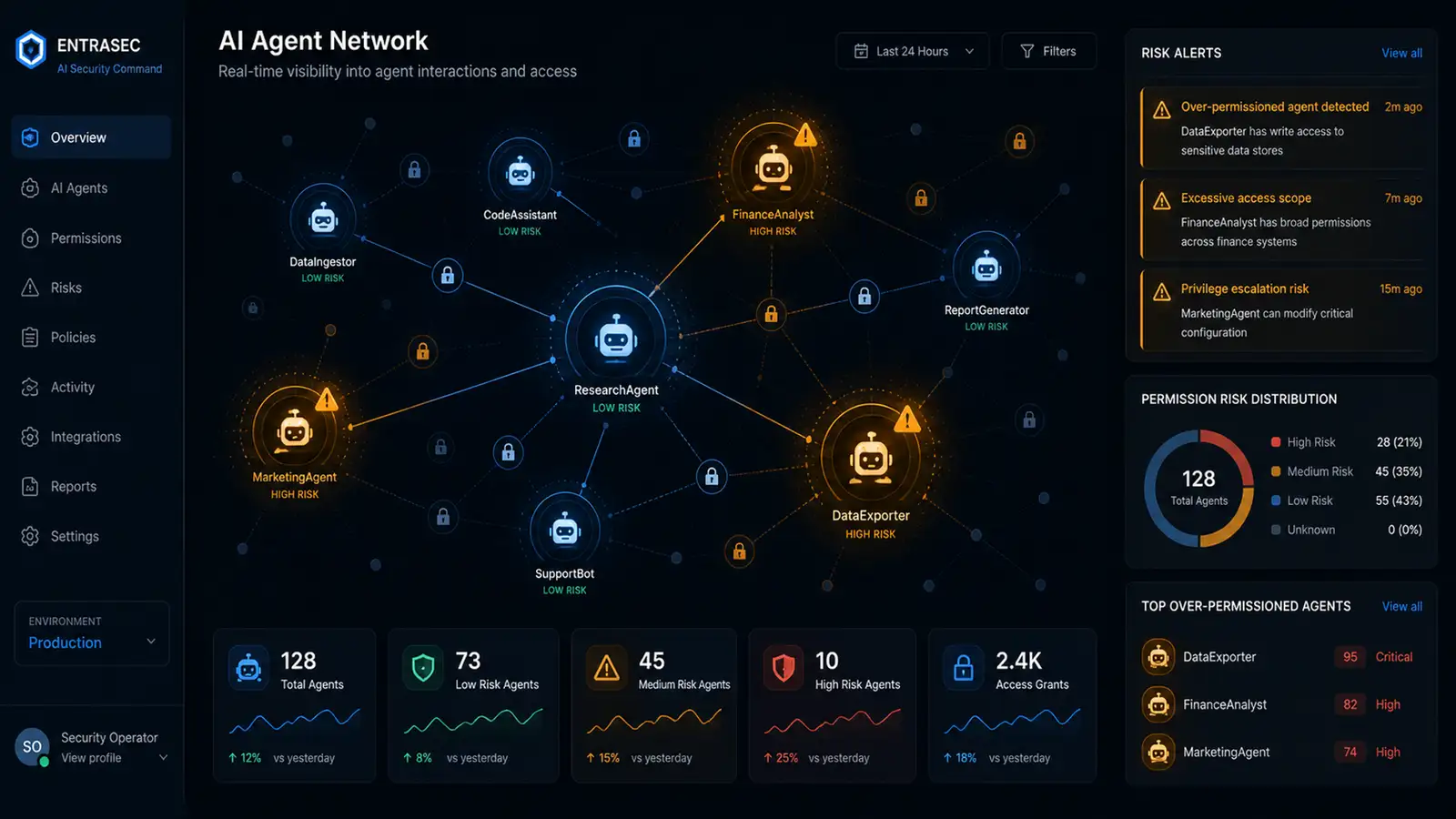
The platform upgrade addresses three problems that anyone who has tried to deploy agents in a real business environment will recognize immediately. Individual pilot projects are easy to start and hard to scale. Powerful language models are difficult to connect to existing enterprise systems. And once agents are running, security governance and cost control become problems that nobody planned for during the prototype phase.
ADP 4.0 tackles these with three architectural components. The first is something called Claw Mode, which enables agents to handle long-horizon tasks by generating and executing their own code. Instead of relying on predefined workflows, an agent running in Claw Mode can write scripts, call APIs, and chain operations together in ways that weren’t hardcoded by a developer. That’s powerful and also slightly terrifying from a governance standpoint, which is presumably why the second and third components exist.
The Connector framework ships with nearly 40 prebuilt integrations covering CRM systems, ERP platforms, ticketing tools, customer service software, knowledge bases, and document management systems. Google Workspace, Confluence, and Jira are all supported in the initial batch. The idea is that agents don’t just generate text about what to do. They actually read data from these systems, perform operations, and route outputs back into the workflows that real teams depend on.
The Skills Marketplace has been expanded to over 150 prebuilt capabilities. Business teams can package custom skills as shared enterprise plugins that only become available after passing security review and approval workflows. This is the governance layer that most agent platforms have been missing: a way to let teams build fast without letting them bypass the security team entirely.
The Governance Gap That AgentOps Is Trying to Fill
Tencent’s timing is good, but the problem they’re solving isn’t unique to their platform. Forrester’s State of Agentic AI in 2026 report, published the same week as the Tencent announcement, found that AI agents are now technically viable but most organizations are nowhere near operational maturity. The report’s central finding: the question is no longer whether AI agents work, but whether enterprises have the architecture, governance, and operating model needed to deploy them safely at scale.
The numbers back this up. McKinsey reported in late 2025 that 23 percent of organizations were scaling agentic AI in at least one business function. That sounds impressive until you look at the breakdown: no individual business function reported deployment above 10 percent. Most companies are running agents in one department, for one use case, under close supervision. They’re not running fleets.
Gartner’s projections show where this is headed. Fortune 500 organizations currently deploy fewer than 15 agents each on average. By 2028, Gartner expects that number to exceed 15,000. That’s a thousandfold increase in three years, and it’s the kind of trajectory that either produces enormous value or enormous chaos, depending on whether the operational layer exists to manage it.
This is the bet Tencent is making. AgentOps as a category won’t matter if enterprises only ever run a handful of agents for narrow tasks. It matters enormously if Gartner is right and every Fortune 500 company is managing thousands of semi-autonomous AI workers within five years. In that world, you need exactly what ADP 4.0 is offering: standardized connectors, governed skill marketplaces, and agent monitoring that looks more like infrastructure management than prompt engineering.
Why This Is Different From the Last Wave of AI Platforms
The AI platform gold rush of 2023 through 2025 was mostly about model access. Every cloud provider and startup offered APIs for language models, image generation, embeddings, and retrieval. The value proposition was simple: pay us and your developers can call GPT-4 or Claude or Llama without managing GPUs. The winners of that wave were the companies with the best models and the most reliable infrastructure.
That wave is maturing, and the differentiation is shifting in ways that should make every model provider nervous. Model quality is converging. GPT-5, Claude 4, Kimi K3, and the next generation of open-weight models are all competitive on most benchmarks, and the gaps between them are measured in single-digit percentage points that disappear when you look at real-world task completion rather than benchmark scores. Nobody wins a long-term enterprise contract because their model scores two points higher on a leaderboard. They win because their platform makes it safe and practical to deploy agents at scale.
The next wave is about the operational layer that sits between the model and the business. How do you connect an agent to Salesforce without writing custom middleware for every customer? How do you let a marketing team build an agent that queries a Snowflake warehouse without giving it access to the entire database? How do you audit what thousands of agents did last Tuesday and explain it to a regulator who wants to know whether any of them accessed PII without authorization? These are infrastructure problems, not model problems. They’re exactly the problems that DevOps platforms solved for traditional software two decades ago — CI/CD pipelines, infrastructure as code, monitoring, alerting, rollback — just applied to a new kind of software that writes its own behavior at runtime.
Tencent’s ADP 4.0 is the first major platform to explicitly position itself as the AgentOps layer rather than just another model API with a few extra features. The Connector framework, the Skills Marketplace with enterprise governance, the Claw Mode that lets agents self-code while staying within defined boundaries — these aren’t features you bolt onto a model endpoint. They’re the scaffolding of a new operations discipline.
The Open Question
Whether the market is ready for AgentOps as a category is a separate question from whether Tencent built the right product for it. Forrester’s data suggests most enterprises are still in the pilot phase, running constrained, heavily supervised agents for narrow workflows. The governance concerns that ADP 4.0 addresses — security review, cost control, system integration — are real, but they’re problems that most companies haven’t fully encountered yet because they haven’t deployed enough agents to feel the pain.
That might change faster than anyone expects. Gartner’s 15-to-15,000 projection is aggressive, but the underlying drivers are sound. Model capability is improving with every generation. Tool use is becoming a standard feature rather than a differentiator. Enterprise software vendors — Salesforce, SAP, ServiceNow, Workday — are building agent interfaces into their products whether customers ask for them or not. The infrastructure layer needs to exist before the adoption curve spikes, not after.
The security angle adds urgency. Infosecurity Magazine reported last week that AI agents are now the fastest-growing exposed attack surface in enterprise environments. An agent with access to a CRM and an email system can do a lot of damage if it’s compromised, and traditional security tools weren’t designed to monitor autonomous software that generates its own actions in real time. Tencent’s emphasis on governance — skills that require approval before deployment, connectors that operate within defined permission boundaries — isn’t just a nice-to-have. It’s table stakes for any enterprise that takes its compliance obligations seriously.
There’s also a talent dimension. The people who build agents today tend to be ML engineers who know how to fine-tune models and write prompt chains. The people who will need to manage thousands of agents in 2028 are more likely to be platform engineers and SREs who understand observability, rate limiting, cost attribution, and incident response. AgentOps isn’t just new tooling. It’s a new job function, and the platforms that win will be the ones that make that function learnable rather than requiring a PhD in both machine learning and distributed systems.
Tencent is betting it can build that layer and capture the market before AWS, Google Cloud, and Microsoft Azure do the same thing with their own platforms. The ADP 4.0 announcement at WAIC was a global launch, not a China-only release, which tells you that Tencent sees this as a race for international enterprise customers, not just domestic ones. The fact that the Connector framework already supports Google Workspace, Confluence, and Jira — tools that are far more common in Western enterprises than Chinese ones — confirms that the ambition is global.
If Gartner’s numbers are even half right, the company that owns the AgentOps layer in 2028 will be worth a lot more than the company that owns the fifth-best language model API. Tencent just placed its bet. The rest of the cloud market is about to do the same.