The XR Industry Just Got Clinical: XRHealth Acquires Swing Therapeutics
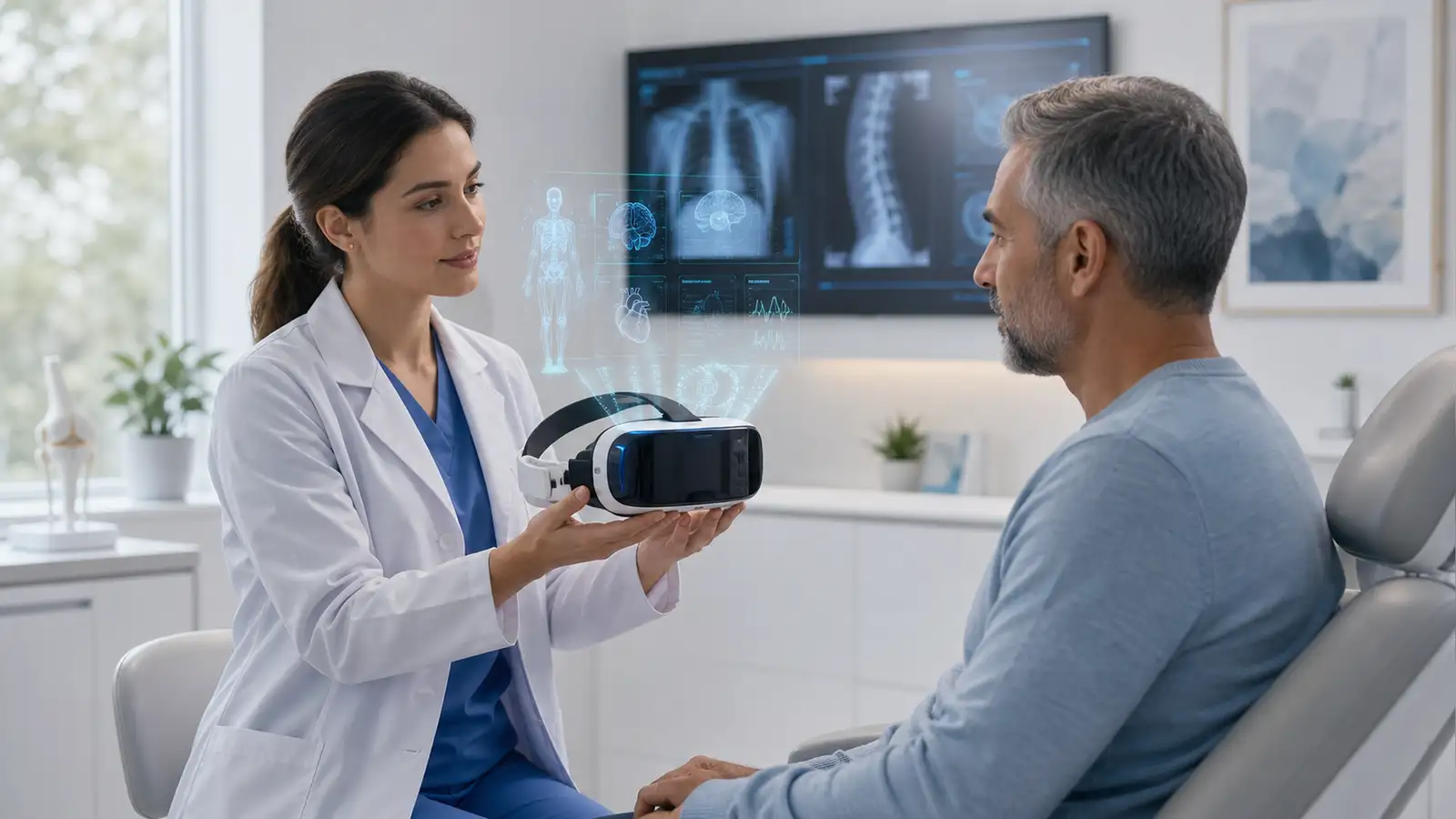
For the last decade, the XR industry has made two promises. One was cinematic: immersive worlds, virtual meetings that felt real, a metaverse where you’d work, play, and shop. The other was clinical: software that could treat pain, anxiety, and chronic conditions with the same rigor as a pill.
The first promise has been slow to materialize. Meta has poured tens of billions into Reality Labs and has relatively little consumer adoption to show for it. Apple’s Vision Pro earned rave reviews for its engineering and shrugs for its sales. Microsoft quietly wound down HoloLens. The consumer XR story, for all its technical brilliance, remains a story about potential.
The second promise just took a decisive step forward.
On July 15, 2026, XRHealth announced the acquisition of Swing Therapeutics, creating what the company describes as the largest multi-device extended reality digital health platform for chronic conditions. The deal isn’t just another health-tech merger. It’s the moment XR stops being a consumer novelty and starts being medicine — FDA-approved, clinically validated, insurance-reimbursed medicine.
What Swing Brings to the Table
The centerpiece of the acquisition is Stanza, a prescription digital therapeutic that holds a distinction no other XR-based treatment can claim: FDA De Novo authorization for the treatment of fibromyalgia symptoms.
Fibromyalgia affects roughly 10 million Americans. It causes widespread chronic pain, crushing fatigue, and cognitive difficulties that patients often describe as “brain fog.” Despite its prevalence, it has historically been one of the most poorly managed conditions in medicine. Patients cycle through medications with limited efficacy — gabapentin, pregabalin, duloxetine, milnacipran — and many are told, implicitly or explicitly, that their symptoms are psychological, that the pain is in their head, that they should try yoga.
Stanza offers something fundamentally different. The program uses Acceptance and Commitment Therapy, a well-established psychological framework, delivered through a structured digital protocol. Instead of trying to eliminate pain (which traditional medicine has largely failed to do for fibromyalgia patients), ACT helps patients change their relationship with pain. The goal isn’t to make the sensation disappear. It’s to reduce the suffering that the sensation causes — to teach the brain that pain is a signal, not a sentence.
The evidence isn’t anecdotal. A Phase 3 randomized controlled trial — the gold standard of clinical research, the same bar a new pharmaceutical has to clear — published in The Lancet demonstrated statistically significant reductions in pain intensity, fatigue, and depression among patients using Stanza. Placebo-controlled. Peer-reviewed. Published in one of the world’s most prestigious medical journals.
For an industry that has spent years fighting the perception that VR headsets are elaborate gaming accessories, a Phase 3 trial in The Lancet is more valuable than any amount of venture capital. It’s a signal from the medical establishment that says: this is not a toy.
Why This Deal Matters Beyond Healthcare
The XR industry has been searching for a killer application since Oculus shipped its first developer kit in 2013. Gaming found an audience — Beat Saber alone has generated hundreds of millions in revenue. Enterprise training found a niche — Walmart used VR to train over a million employees. Fitness found a surprisingly loyal user base — Supernatural was acquired by Meta in 2021 for a reported $400 million.
But none of these use cases has delivered the kind of mainstream adoption that turns a technology sector into a permanent, unignorable part of the economy. Gamers buy headsets, play for a while, and many eventually let them gather dust. Enterprise training has a real but narrow ROI case that depends on the specific task being trained. Fitness is promising but faces the same retention problem as every gym membership sold in January.
Healthcare might be different. Unlike gaming — where VR competes with console, PC, mobile, and every other form of entertainment for the user’s attention — and enterprise training — where the return on investment case is often debatable and always context-dependent — medical XR addresses a genuine, measurable, and desperately underserved need.
Chronic pain affects 50 million Americans. Anxiety disorders affect 40 million. PTSD affects 13 million, including a disproportionate number of veterans. These are conditions where traditional treatments frequently fall short, where patients spend years cycling through medications and therapies with limited results, and where a clinically validated digital intervention isn’t competing with Netflix for screen time. It’s competing with opioids.
The reimbursement angle is what transforms the business case from “interesting” to “inevitable.” Stanza is covered by Medicare Part B, VA programs, and commercial insurance pathways. That means the path from prescription to payment already exists. A physician can prescribe Stanza the way they’d prescribe a drug, and the healthcare system — slow, bureaucratic, pathologically risk-averse — has already agreed to pay for it.
That is a bigger commercial milestone for the XR industry than any headset launch. Consumer hardware companies have to convince individual people to spend hundreds or thousands of dollars on a device they might use a few times a month. XRHealth has to convince insurance companies to reimburse a treatment that lowers their total cost of care. One of those sales pitches is significantly easier than the other when the data is on your side.
The Technical Integration
XRHealth isn’t simply bolting a VR app onto a hospital network. The Swing acquisition brings Swing Care, a multidisciplinary virtual specialty clinic led by Dr. Andrea Chadwick, a leading fibromyalgia researcher and clinician. The clinic model unifies behavioral digital software with physician-monitored medication management, creating what the company describes as a whole-patient approach.
A patient with fibromyalgia might do their daily ACT session in a VR headset. They might track symptoms throughout the day through a phone app. Their physician might monitor progress through a dashboard fed by wearable data. The combined platform deploys across VR glasses, smartphones, and wearables — it’s not a VR company, it’s a care delivery company that happens to use VR as one of its tools.
This distinction matters. The metaverse hype cycle — with its digital real estate auctions, its cartoon avatars in virtual boardrooms, its breathless predictions about how we’d all soon live in headsets — completely missed what makes XR valuable in medicine. It’s not immersion. It’s not escapism. It’s presence. It’s the ability to deliver a therapeutic intervention that feels immediate and embodied in a way that a worksheet, a telehealth call, or a meditation app never could.
When a fibromyalgia patient goes through an ACT session in VR, they’re not escaping their body. They’re renegotiating their relationship with it, in an environment that commands their full attention in a way a paper workbook simply cannot. The XR component isn’t a gimmick. It’s the mechanism.
What This Means for the Broader Industry
The XR industry has spent a decade bouncing between cycles of irrational exuberance and bitter disillusionment. The 2016-2017 VR gold rush gave way to the “VR is dead” narrative of 2018-2019. The metaverse frenzy of 2021-2022 gave way to the AI-eats-everything narrative of 2023-2024. Through it all, the underlying technology improved steadily — better optics, lighter headsets, more natural interaction models — but the use case that would justify the investment remained elusive.
The XRHealth-Swing deal challenges that narrative by doing something no amount of venture capital or headset marketing could: it proves a better outcome. Nobody cares whether the device delivering their fibromyalgia treatment has pancake lenses or micro-OLED displays. They care whether their pain gets better. The FDA authorization doesn’t mention the headset specs. It mentions the clinical endpoints.
The Lancet publication doesn’t discuss field of view. It discusses reductions in pain intensity, fatigue, and depression. These are outcomes that matter to patients, physicians, and payers. They’re outcomes that don’t depend on whether Apple or Meta wins the hardware war, or whether the metaverse ever materializes as a consumer phenomenon.
The XR industry has spent too long trying to convince healthy people to buy headsets for entertainment. The bigger opportunity may be convincing sick people — and the institutions that pay for their care — to use headsets for treatment. One of those markets measures success in engagement minutes. The other measures it in quality-adjusted life years. The second market is harder to enter but far harder to leave once you’re established.
The metaverse may still arrive. But while the rest of the industry was building virtual conference rooms and debating the ideal number of pixels per degree, XRHealth was building FDA-approved medicine that actually shipped. One of those things has a Phase 3 trial in The Lancet. It’s the one that matters.
The lesson for the broader XR industry is uncomfortable but clear: the most viable path to mainstream adoption may not run through consumer entertainment at all. It may run through clinical validation, FDA authorization, and insurance reimbursement. The gaming industry can sustain a niche hardware market indefinitely, as it has for decades. But if XR wants to be more than a niche — if it wants to be infrastructure — it needs use cases where the technology isn’t competing for discretionary attention but addressing non-discretionary needs.
Healthcare is the most obvious candidate. The Department of Veterans Affairs has been one of the most aggressive early adopters of VR therapy, using it to treat PTSD in combat veterans with results that have attracted attention from military health systems worldwide. Physical rehabilitation is another growing area — VR-guided movement therapy for stroke patients, for example, has shown promise in restoring motor function by tricking the brain into treating repetitive exercise as play rather than work. Chronic pain, anxiety, depression, phobia treatment, pre-surgical anxiety reduction — the pipeline of clinical applications is deeper than most people realize, and it doesn’t depend on anyone wanting to attend a virtual meeting as a legless avatar.
If the XRHealth model works — if FDA authorization plus clinical evidence plus insurance reimbursement creates a sustainable business — the rest of the industry will follow. Not because anyone wants to abandon the dream of the metaverse, but because healthcare is where the money and the need actually intersect. The next big XR company might not make headsets at all. It might make prescriptions that happen to be delivered through them.