Poolin, Once the World's Largest Bitcoin Mining Pool, Files for Chapter 11 Bankruptcy
Poolin, once the undisputed largest and most dominant Bitcoin mining pool in the entire world, has filed for Chapter 11 bankruptcy protection in the United States, closing the book on a company that at its peak was responsible for securing more than a fifth of the entire Bitcoin network.
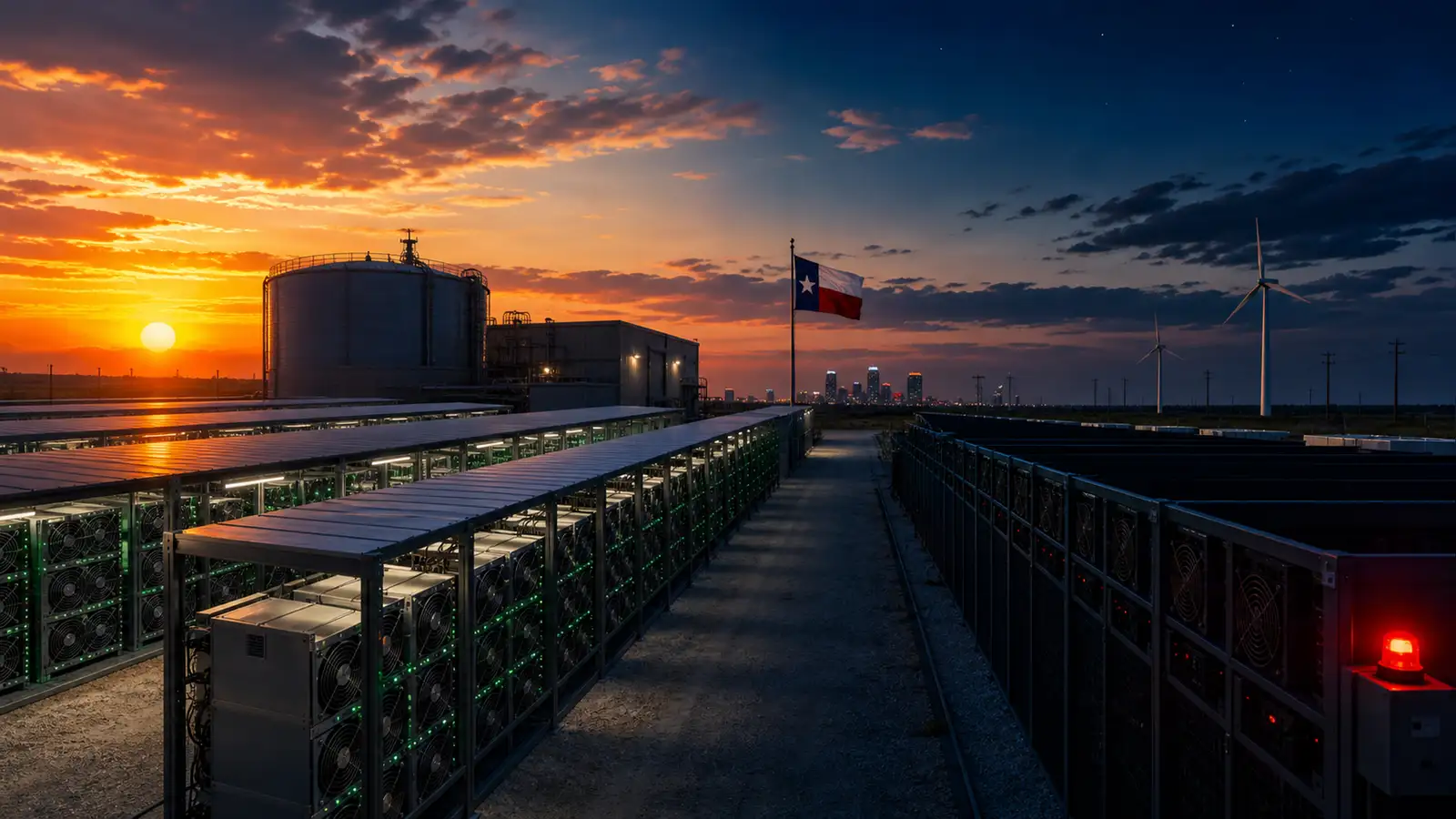
Court documents filed in New Jersey show the company carrying $173 million in debt. As part of the restructuring, Poolin has proposed selling its West Texas mining facilities for $52 million and winding down what remains of its operations.
The bankruptcy does not come out of nowhere. Poolin’s trajectory tracks almost perfectly with the boom-and-bust cycle that has defined the cryptocurrency mining industry over the past decade. It is a story of rapid ascent during the good times, followed by a cascade of external shocks — regulatory, geographic, and financial — that ultimately proved too much to survive.
To understand why Poolin’s collapse matters, you have to understand what mining pools actually do. Individual Bitcoin miners contribute their computing power to a pool, which aggregates that hashrate and distributes block rewards proportionally among participants. The pool operator takes a fee for managing the infrastructure and coordinating payouts. When Poolin was at its peak, processing more than 20% of all Bitcoin blocks, it was not just a business — it was critical infrastructure for the entire network.
From dominance to collapse
Poolin was founded in 2017 by former executives from Bitmain, the once-dominant Chinese mining hardware giant that itself has faced significant challenges in recent years, including a failed IPO and internal leadership disputes. Poolin grew rapidly and decisively, riding the crypto bull market to become the world’s biggest mining pool. At its height, Poolin controlled more than 20% of Bitcoin’s total hashrate, meaning one in every five blocks mined on the network passed through its infrastructure. That level of dominance was unprecedented in the history of Bitcoin mining.
The company did not stop at mining. As the industry expanded, Poolin branched into wallet services, staking platforms, and a range of crypto financial products, positioning itself as a full-stack service provider for the mining ecosystem at every layer of the stack.
The turning point came in 2021, when China launched a sweeping crackdown on cryptocurrency mining. Overnight, companies that had built massive operations in provinces like Sichuan and Inner Mongolia — where cheap hydropower had made Bitcoin mining economically viable — were forced to shut down and relocate.
Poolin relocated much of its massive business overseas, setting up new facilities in North America and elsewhere. But the transition was expensive, and the timing could hardly have been worse.
Relocating a mining operation is not like moving an office. ASIC miners — the specialized hardware that performs Bitcoin’s proof-of-work calculations — are sensitive to temperature, humidity, and power quality. They cannot simply be unplugged, shipped across the ocean, and plugged back in without significant downtime and degradation risk. Poolin had to build or lease new facilities, negotiate power purchase agreements with local utilities, and navigate a regulatory landscape that varied from state to state and country to country.
Meanwhile, Bitcoin’s price entered a prolonged downturn from its 2021 highs, eroding the revenue side of the equation. Energy costs surged globally, driven by geopolitical instability and inflation. The economics of mining — already a thin-margin business at scale — became punishing. Miners who had taken on debt to fund expansion during the bull market found themselves squeezed from both directions: lower revenue from depressed coin prices, and higher costs from everything else.
Poolin’s attempt to diversify beyond pure mining — into wallet services, staking platforms, and financial products — suggests management saw the writing on the wall and tried to build revenue streams that were not tied to hashprice. But diversification takes time to generate meaningful cash flow, and Poolin did not have time. The debt accumulated during the expansion years came due faster than the new business lines could ramp up.
What the bankruptcy means for Bitcoin mining
Poolin’s collapse is significant beyond the fate of a single company. For years, the Bitcoin mining industry has been consolidating, with larger, publicly traded firms absorbing smaller operators and building ever-larger facilities in places like Texas, where energy markets and regulatory environments are relatively favorable.
The Poolin bankruptcy suggests that even well-established players with diversified revenue streams are vulnerable to the combination of volatile asset prices, rising operational costs, and geopolitical disruption. The company did not fail because mining stopped being profitable in absolute terms. It failed because the buffer between profitability and insolvency is thinner than the industry’s boosters have tended to acknowledge.
Mining is fundamentally a commodity business. Miners compete on two variables: the cost of electricity and the efficiency of their hardware. When Bitcoin’s price is high, everyone makes money, and the distinction between a well-run operation and a poorly run one blurs. When the price drops, only the lowest-cost producers survive. Poolin’s Chinese operations had access to some of the cheapest electricity in the world during the pre-crackdown years. Losing that advantage, and then facing higher energy costs in North America while Bitcoin’s price slumped, was a double hit that the company could not absorb.
There is also a concentration question that Poolin’s rise and fall brings into focus. When a single entity controls over 20% of a network’s hashrate, the decentralization that Bitcoin’s design promises becomes more theoretical than real. A mining pool with that much influence can, in theory, collude to censor transactions or execute a 51% attack, though no evidence suggests Poolin ever attempted either. Its exit reduces that concentration risk somewhat, but the mining pools that absorb its former hashrate may simply recreate the same problem under different ownership. Marathon and Foundry USA already dominate significant portions of the network, and Poolin’s collapse may accelerate their growth.
The Chapter 11 filing also raises questions about what happens to Poolin’s creditors. The company owes $173 million against assets it proposes to sell for $52 million, leaving a gap of over $120 million that creditors will have to absorb. Among those creditors are likely hardware suppliers who provided ASIC miners on credit, energy providers with unpaid power bills, and institutional lenders who financed Poolin’s expansion during the bull market. Their losses will ripple through the mining supply chain and may tighten credit availability for other miners seeking to expand. When the biggest name in the business defaults, lenders get nervous about everyone else.
The buyers and what comes next
The proposed $52 million sale of Poolin’s Texas facilities will likely attract interest from the larger publicly traded mining companies that have been on an acquisition spree. Marathon Digital, Riot Platforms, and CleanSpark have all expanded aggressively through asset purchases from distressed competitors. Poolin’s Texas infrastructure — already built, already permitted, and located in one of the most mining-friendly jurisdictions in the United States — is exactly the kind of asset they target.
For buyers, distressed acquisitions are the most capital-efficient way to grow. Building a new mining facility from scratch involves permitting delays, grid interconnection studies, and construction timelines that can stretch past eighteen months. Buying an existing facility at a discount — especially one that is already connected to the grid and has power purchase agreements in place — lets the acquirer bring hashrate online in weeks rather than years. Expect the bidding for Poolin’s Texas site to be competitive.
For the broader industry, Poolin’s bankruptcy is a reminder that the mining sector’s consolidation is not just about winners getting bigger. It is about survivors picking over the remains of companies that could not adapt fast enough when the ground shifted. The same forces that drove Poolin under — China’s regulatory crackdown, rising energy prices, and the cyclical nature of crypto markets — are still in play, and they will claim more victims before this cycle is over.
There is also a human cost that the balance sheets do not capture. Poolin employed engineers, technicians, and operations staff across multiple continents. Many of those jobs were tied to facilities that will now be sold, repurposed, or dismantled. The mining industry’s boom-bust cycles are often discussed in terms of hashrate and revenue, but the people who keep the machines running experience those cycles as paychecks that appear and disappear with little warning.
Poolin is not the first mining giant to fall, and it will not be the last. But as the former number one, its bankruptcy carries symbolic weight that goes far beyond the balance sheet numbers. The company that once processed more Bitcoin blocks than anyone else on the planet is now a case study in how fast the ground can shift beneath even the biggest players in crypto. The lesson for everyone else in the mining business is straightforward, and it should keep a few CEOs up at night: the distance between market leader and bankruptcy filing is shorter than it looks, and the warning signs are easy to miss until it is too late.